British Columbia: A Focus on Student Learning and Improvement
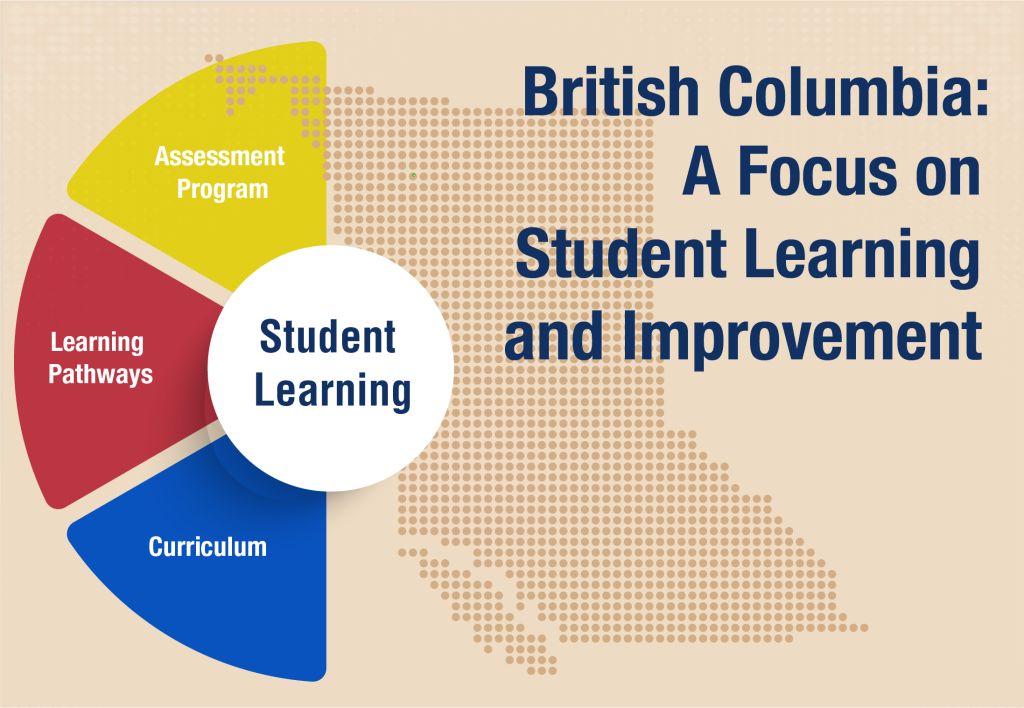
In a recent article[1], I described British Columbia’s (B.C.) reform of its provincial student assessment program, including the transition to e-assessments (in collaboration with its technology partner, Vretta), within the context of the Canadian large-scale assessment landscape and the evolution of the provincial assessments over time. During the past decade, B.C. has undergone substantial reform with regard to both its curriculum and assessment framework. The reform is intended to make education more relevant, engaging and appropriate for a modern, changing world. An explicit goal of the new curriculum is to improve school success for all Indigenous students by including the voices of Indigenous people in all aspects of the curriculum, including languages, cultures and histories. The current provincial assessment model requires that all students in Grades 4, 7, 10 and 12 complete annual assessments in numeracy and/or literacy (reading and writing) as follows: Grades 4 and 7 literacy and numeracy (the Foundation Skills Assessment program), Grade 10 literacy and numeracy and Grade 12 literacy assessments (Graduation Program). These assessments do not contribute to students’ final grades or report cards; however, participation of Grade 10 and 12 students is required for graduation. Although the provincial assessments are not classified as formative or summative, the provincial, school district and school results are publicly reported and may be used for formative purposes. Formulated to be in alignment with the B.C. Curriculum and provincial student assessments, the B.C. Learning Pathways initiative provides resources that support cross-curricular literacy and numeracy learning with an emphasis on critical thinking and communication from Kindergarten to Grade 12.
The purpose of this article is to provide a high-level overview of British Columbia’s curriculum and assessment strategy—highlighting how provincial assessment data and classroom resources are being used to drive continuous improvement.
To learn more about how the province is aligning assessments with the Learning Pathways initiative to enhance educational outcomes, read the full article here.