Vretta
Justice in Assessment: Are we fair?
Vali Huseyn
Educational Assessment Specialist
29th May 2026
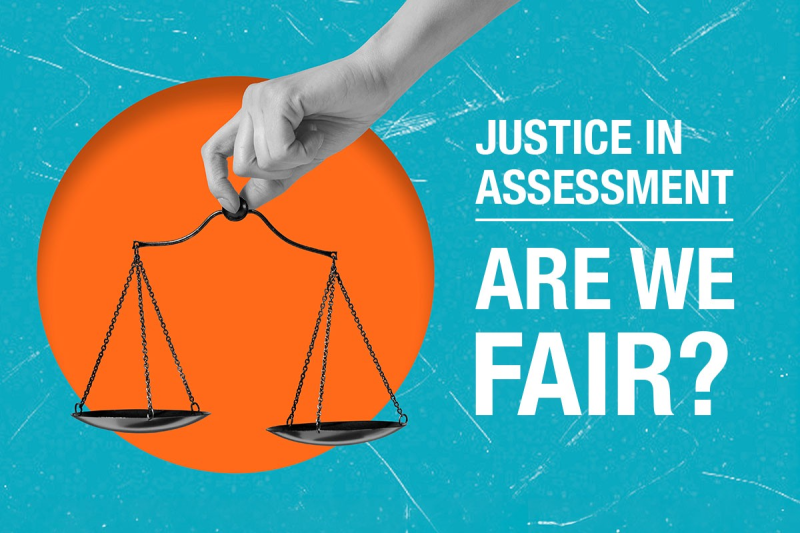
Even if we were not a human society but a flock of birds or a pride of lions, we would still need justice. From its instinctive origins, the concept of justice has evolved. In the modern world, as technologies have become deeply integrated into our lives, they have also impacted on the facade of our universal human values, such as justice.
Fairness and justice are frequently discussed and demanded. Readers of today read at least one news of that nature both globally and within national contexts, across various sectors. For example, in education, this is reflected in the concept of academic integrity; in sport, in the idea of fair play; and in tourism, in the notion of green travel. Each of these principles carries a common ethical message: that hard work and commitment should be recognised and appreciated fairly. In the context of educational assessment, justice takes on a more specific ethical meaning beyond academic integrity. First, there is a technical dimension that requires assessment outcomes to accurately reflect what learners know and can do. The second side of the coin is the ethical dimension making sure that no learner is advantaged or disadvantaged by factors unrelated to their ability.
This article explores the concept of justice in both its broader philosophical sense and its application to educational assessment. It draws on practical examples and examines how technology can support more just assessment practices, offering insights for decision-makers responsible for assessment systems.
To better understand why fair assessment matters and the responsibility it entails, read the full article here.