Bridging the Gap: From Summative to Interim Assessments
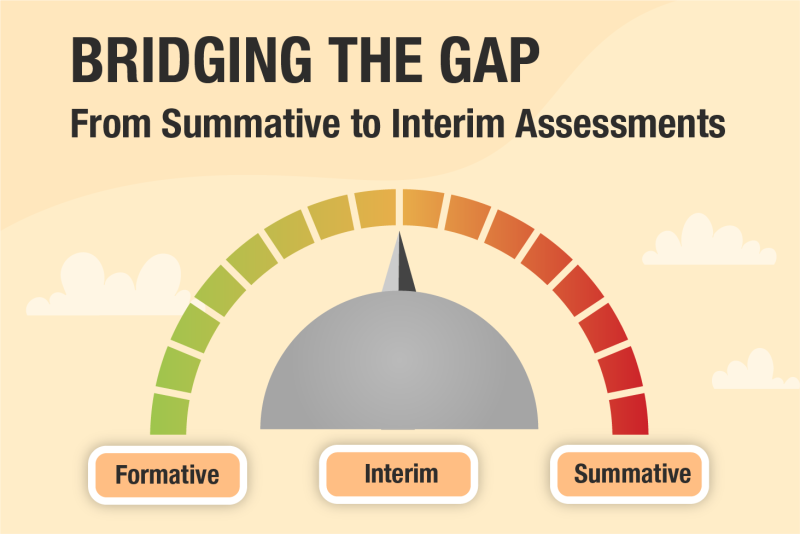
In a jurisdiction with a focus on digitalized assessment reforms, policymakers are well-positioned to implement increased data collection efforts for evidence-based decision-making to improve school performance and allocate resources accordingly. So, policymakers aim government-funded assessment programs to address both broader learning trends and focused feedback, supporting instructional utility by providing actionable insights for educators. In this context, the key question for stakeholders remains: with the growth of digitalization and the increasing accessibility of assessments, to what extent should various types of assessments be integrated into the learning environment to maximize their impact on teaching and learning?
Responding to this question requires first picturing assessments within the learning process. This approach can help policymakers and educators visualize and identify the optimal points for intervention, including decisions on whether to implement voluntary or mandatory measures. The goal here would be to build a unified system that supports continuous feedback, progress monitoring, and final evaluations through the use of through-year assessments, which incorporate aspects of formative, interim, and summative assessments.
Read the full article here.