6 Common Myths About Digital Assessment Debunked.
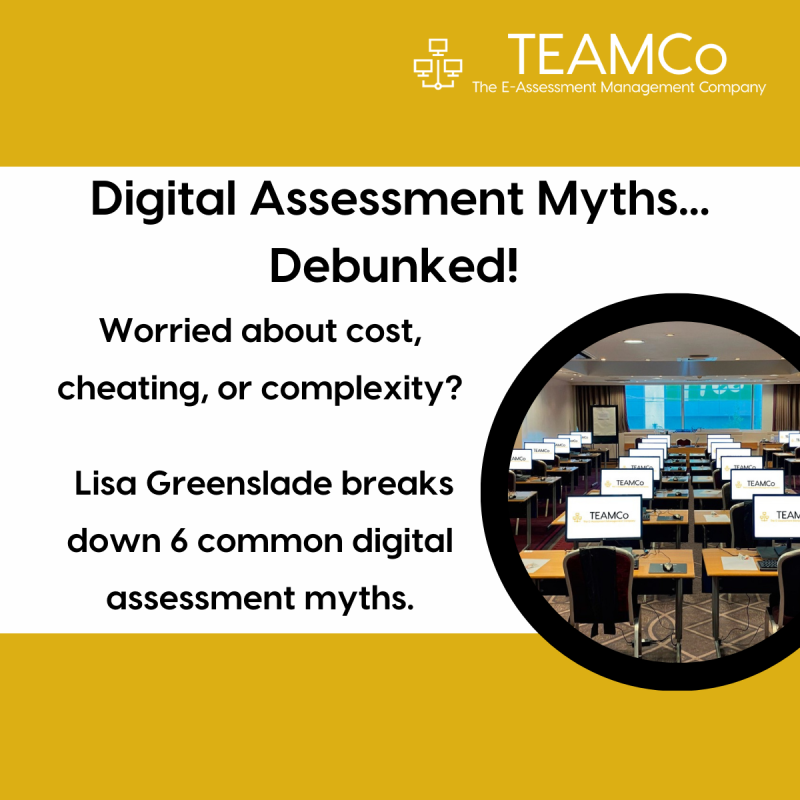
Thinking about digital assessment but unsure if it’s the right move? You’re not alone. Myths around cost, cheating, and the need for a full system overhaul often cloud the conversation. Lisa has tackled six of the most common misconceptions, breaking them down to help institutions make informed decisions.
When it comes to digital assessment, misconceptions around. Some fear the costs, others worry about security, and many assume it requires a complete system overhaul. But the reality? Digital assessment is more flexible, scalable, and secure than you might think.
In this article Lisa Greenslade, TEAMCo’s University Partnership Manager, sets the record straight. With years of experience supporting universities through assessment transformation, Lisa has worked closely with institutions to navigate the shift to digital exams—ensuring smooth implementation and maximising the benefits.
Misconceptions about digital assessment are everywhere. Some fear high costs, security risks, or the need for a complete system overhaul. But the reality? Digital exams are flexible, scalable, and more secure than you think.
Here, Lisa debunks six of the biggest myths about digital assessment:
📌 Myth 1: “You need
a dedicated platform to run digital exams.”
Not true! Many universities successfully use their existing VLEs (like Moodle or Blackboard) for online exams before investing in new platforms.
📌 Myth 2: “Go
ing digital is too expensive.”
Switching to digital doesn’t necessarily increase costs—it shifts spending. Paper exams come with expenses like printing, distribution, and processing. Digital assessment cuts admin time and scales efficiently as student numbers grow.
📌 Myth 3: “Scaling up requires major investment.”
Whether you’re running exams for 50 or 1,500 students, solutions exist. Institutions can combine on-campus spaces, external venues, and remote proctoring, with support for hardware, invigilation, and tech assistance.
📌 Myth 4: “Digital exams make cheating easier.”
In fact, cheating is harder. Lockdown browsers, screen monitoring, and question randomisation prevent dishonesty. Exams can still be held in controlled, invigilated environments to ensure fairness.
📌 Myth 5: “Technology isn’t inclusive.”
Digital assessment is often more inclusive. Many students with disabilities already use computers for exams. Accessibility settings allow customized displays, making the process smoother for both students and administrators.
📌 Myth 6: “Only Exams Teams benefit from digital assessment.”
Think again! Digital exams streamline:
✔ Disability & wellbeing services
✔ Student conduct & appeals
✔ Programme administration
✔ Marking & moderation
✔ Assessment design & delivery
Digital assessment isn’t just about replacing paper—it’s about creating a smarter, more efficient, and accessible exam process.
Want to learn more? TEAMCo is here to help!